

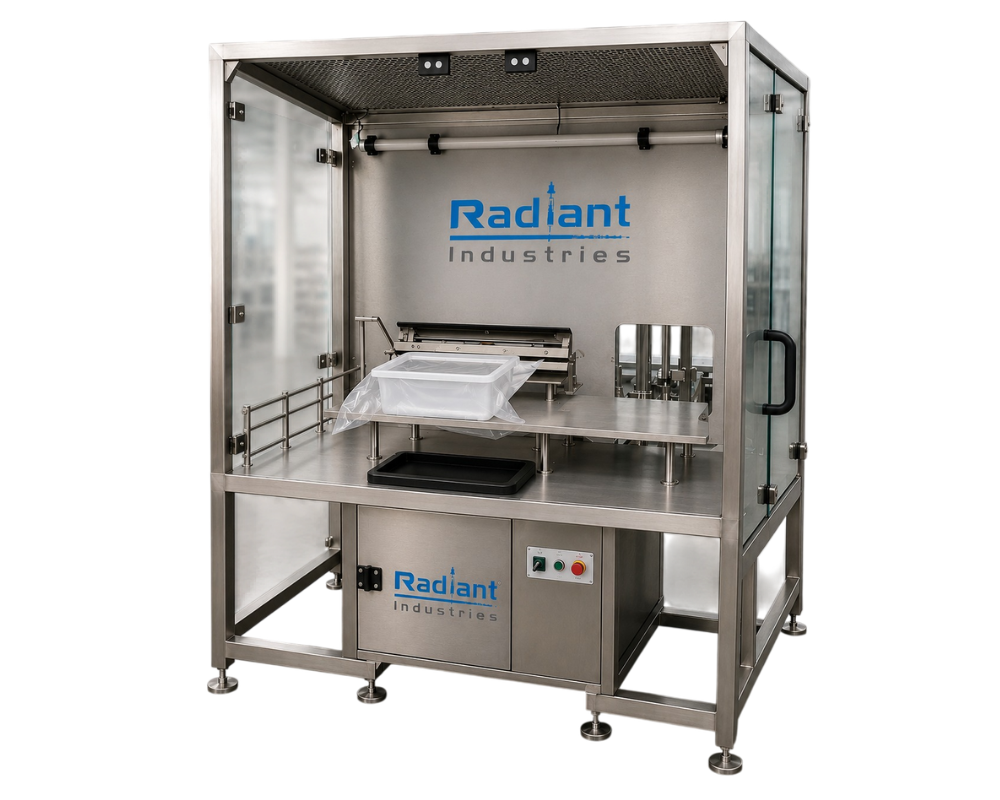
Semi Manual Syringe Tub De-Bagging Machine

Operational Process
- The Semi Manual Syringe Tub De-Bagging Machine is a compact and efficient pharmaceutical handling system designed to safely remove the outer sterile plastic bag from Ready-to-Use (RTU) syringe tubs while preserving product sterility and minimizing operator intervention. Specifically developed for aseptic manufacturing environments, the machine provides a reliable and contamination-controlled solution for pharmaceutical and biotechnology companies handling nested syringe tubs prior to filling operations. Combining manual loading with precision-assisted de-bagging, the machine offers an ideal balance of operational simplicity, product protection, and cost-effectiveness.
-
The operation begins with the operator manually placing the sterilized syringe tub onto the machine's working platform. Once positioned correctly, the operator aligns the plastic bag at the cutting area, and the integrated cutting mechanism performs a clean and precise cut without contacting the sterile tub or its contents. The bag is then carefully separated using the machine's handling mechanism, allowing the outer packaging to be removed smoothly while maintaining the integrity of the sterile syringe nest. This controlled process significantly reduces the risk of contamination, particle generation, and product damage compared to conventional manual de-bagging methods.
RTU Tub Loading: –
The de-bagging process begins with the manual loading of the Ready-to-Use (RTU) sterile syringe tub onto the machine’s working platform. The operator carefully places the bagged syringe tub into the designated loading area while following standard aseptic handling procedures. The loading platform is ergonomically designed to provide easy access and accurate positioning of the tub, minimizing operator fatigue while ensuring safe product handling. Since the syringe tub contains sterilized nested syringes, maintaining the integrity of the sterile packaging during this stage is essential to prevent contamination before entering the aseptic filling process.
Once the RTU tub is positioned on the loading platform, precision guides and locating fixtures securely hold the tub in its correct position. These positioning mechanisms prevent unnecessary movement during the subsequent de-bagging operation and ensure that the outer plastic bag is properly aligned with the cutting system. Accurate positioning not only improves the efficiency of the bag removal process but also protects the sterile syringe nest from accidental damage caused by improper handling or misalignment.
The machine incorporates a user-friendly operating interface with simple start controls, allowing the operator to initiate the de-bagging cycle after confirming correct tub placement. Depending on the machine configuration, integrated sensors may verify the presence of the RTU tub before enabling the next operation. This verification helps eliminate processing errors and ensures that the machine operates only when the product is correctly loaded, thereby improving process reliability and maintaining consistent production quality.
The RTU Tub Loading stage serves as the foundation of the entire de-bagging process. Proper loading, secure positioning, and careful handling ensure smooth downstream operations while maintaining the sterility of the syringe tub. By combining ergonomic design with precise positioning features, the machine enhances operator safety, reduces handling errors, and supports GMP-compliant pharmaceutical manufacturing practices.
Outer Bag Removal: –
After the RTU syringe tub has been securely positioned on the loading platform, the operator initiates the Outer Bag Removal process. This stage involves carefully separating the external sterile plastic bag from the syringe tub without disturbing the sterile nest inside. The machine is designed to assist the operator by providing a stable working platform and controlled handling, ensuring that the packaging is removed safely while preserving the sterility of the product. This controlled approach significantly reduces the risk of contamination compared to conventional manual handling methods.
The outer plastic bag serves as a protective barrier during transportation and storage, shielding the sterile syringe tub from environmental contaminants. During the removal process, the operator carefully lifts and positions the bag according to the machine’s operating sequence, ensuring that the packaging remains intact until the appropriate cutting stage. The machine’s ergonomic design allows smooth access to the bag while minimizing unnecessary handling of the sterile tub.
Throughout this operation, the machine maintains proper alignment of the RTU tub, preventing movement that could affect subsequent processing. The controlled removal procedure reduces the possibility of particle generation, accidental tearing, or damage to the sterile packaging. Operators can perform this step quickly and consistently while maintaining compliance with aseptic manufacturing procedures and Good Manufacturing Practice (GMP) guidelines.
The Outer Bag Removal stage is an essential preparation step that enables accurate bag clamping and cutting in the following operations. By combining controlled manual handling with a stable machine platform, the process enhances operator safety, improves production consistency, and ensures that the sterile syringe tub remains fully protected before entering the aseptic processing area.
Transfer to Grade B Zone:-
Once the outer bag has been partially prepared for removal, the RTU syringe tub is transferred into the Grade B processing zone within the machine. This controlled transfer is performed to maintain the sterile integrity of the product before it enters the aseptic filling environment. The machine is specifically designed to support cleanroom operations by minimizing operator contact and ensuring that the sterile tub is handled in a contamination-controlled environment.
During this stage, the operator carefully moves the tub into the designated Grade B work area using the machine’s guiding platform. The transfer path is designed to provide smooth movement while preventing unnecessary vibration or sudden impacts that could disturb the sterile syringe nest. Precision locating features ensure that the tub reaches the correct processing position before the next operation begins.
The machine’s stainless-steel construction and hygienic design support cleanroom operation by minimizing particle accumulation and facilitating easy cleaning. When installed beneath Laminar Air Flow (LAF), within a Restricted Access Barrier System (RABS), or inside an isolator, the transfer process provides an additional level of contamination control required for pharmaceutical manufacturing.
The Transfer to Grade B Zone ensures that the sterile syringe tub is positioned within a controlled environment before bag opening and removal. This step strengthens aseptic process integrity, improves product protection, and supports compliance with international pharmaceutical manufacturing standards.
Bag Clamping:-
After the RTU syringe tub has been correctly positioned within the Grade B zone, the machine performs the Bag Clamping operation. During this stage, the outer plastic bag is securely held in place using precision clamping mechanisms. The purpose of the clamping system is to stabilize the packaging before cutting, preventing unwanted movement that could interfere with the de-bagging process or compromise product safety.
The clamping mechanism applies uniform pressure to the plastic bag without damaging the sterile tub or affecting the integrity of the packaging. This secure grip allows the bag to remain properly tensioned throughout the cutting process, ensuring a clean and controlled opening. The design of the clamping assembly accommodates various RTU tub sizes while maintaining consistent holding force for reliable operation.
By stabilizing the bag before cutting, the machine minimizes the risk of accidental tearing, particle generation, or improper opening. The operator simply initiates the process, while the machine maintains accurate positioning and controlled handling. This reduces operator dependency and improves process repeatability across multiple production batches.
The Bag Clamping stage is a critical step in achieving safe and efficient de-bagging. It provides the stability required for precise cutting, enhances process consistency, and contributes to maintaining aseptic conditions throughout pharmaceutical production.
Bag Cutting / Opening : –
With the plastic bag securely clamped, the machine proceeds to the Bag Cutting / Opening stage. This operation utilizes a precision cutting mechanism designed to create a clean, controlled opening in the outer plastic bag without contacting the sterile syringe tub or its contents. The cutting system ensures that the protective packaging is opened accurately while maintaining product sterility throughout the process.
The cutting blade is positioned to follow a predetermined cutting path, producing a consistent opening every cycle. Because the cutting mechanism is isolated from the sterile tub, there is no direct contact with the nested syringes, significantly reducing the risk of contamination or product damage. The precise cutting action also minimizes the generation of plastic particles, which is essential for maintaining cleanroom standards.
Following the cut, the bag naturally opens, allowing the operator to safely separate the packaging from the syringe tub. The machine’s controlled operation reduces the physical effort required by the operator while improving overall process efficiency. Every cutting cycle is repeatable, ensuring consistent performance regardless of production volume.
The Bag Cutting / Opening process is one of the most important stages in the de-bagging sequence. By providing accurate, contamination-free opening of the sterile packaging, the machine enhances product protection, improves operational efficiency, and supports GMP-compliant pharmaceutical manufacturing.
Tub Transfer: –
Following successful bag opening, the operator carefully transfers the de-bagged RTU syringe tub to the designated output platform or directly to the downstream aseptic filling process. The machine provides a stable and ergonomic working area that allows the operator to handle the sterile tub safely while minimizing unnecessary contact with the product.
The transfer operation is performed in a controlled manner to preserve the orientation and integrity of the syringe nest. Precision support surfaces prevent tilting or vibration during movement, ensuring that the nested syringes remain securely positioned within the tub. This controlled handling reduces the risk of product damage and supports smooth downstream processing.
Throughout the transfer process, the sterile tub remains within the controlled cleanroom environment, protecting it from external contamination. The operator follows standard aseptic procedures while moving the tub toward the filling machine or temporary sterile holding area. The simplified workflow minimizes handling time and improves production efficiency.
The Tub Transfer stage provides a smooth transition between de-bagging and aseptic filling. By ensuring safe product movement and maintaining sterile conditions, this operation contributes to reliable pharmaceutical manufacturing and continuous production flow.
Ready for Filling Process: –
The final stage of the Semi Manual Syringe Tub De-Bagging Machine is the Ready for Filling Process. After the outer bag has been completely removed and the sterile syringe tub has been transferred successfully, the product is fully prepared for the aseptic filling operation. At this point, the nested syringes remain sterile, correctly oriented, and ready for introduction into the filling machine.
Before release to the next process, the operator performs a final visual verification to confirm that the outer bag has been completely removed and that no packaging residue remains around the syringe tub. This inspection ensures that the product meets all quality requirements before entering the filling line. The controlled workflow minimizes contamination risks while maintaining production efficiency.
The prepared RTU tub can now be transferred directly to a semi-automatic or fully automatic syringe filling machine operating under Grade A conditions. Because the de-bagging process has been completed in a controlled environment, the sterile integrity of the product is maintained throughout the transition. This seamless integration reduces production delays and improves overall line productivity.
The Ready for Filling Process stage completes the de-bagging cycle and prepares the RTU syringe tub for aseptic filling. By ensuring product cleanliness, sterility, and proper handling, the machine supports efficient pharmaceutical manufacturing while maintaining full compliance with GMP, cleanroom standards, and aseptic processing requirements.
Always Ready to Serve!
Radiant Industries is committed to delivering quality, innovation, and reliability across every project we undertake.
Let's Discuss Your Requirements

Semi Manual SyringeTub De-Bagging Machine
- Primery Bag revome manually
- Secondary bag remove inside the machine by operator
- Tub move to filling chamber