

Semi-automatic BCT Machine
Operational Process
-
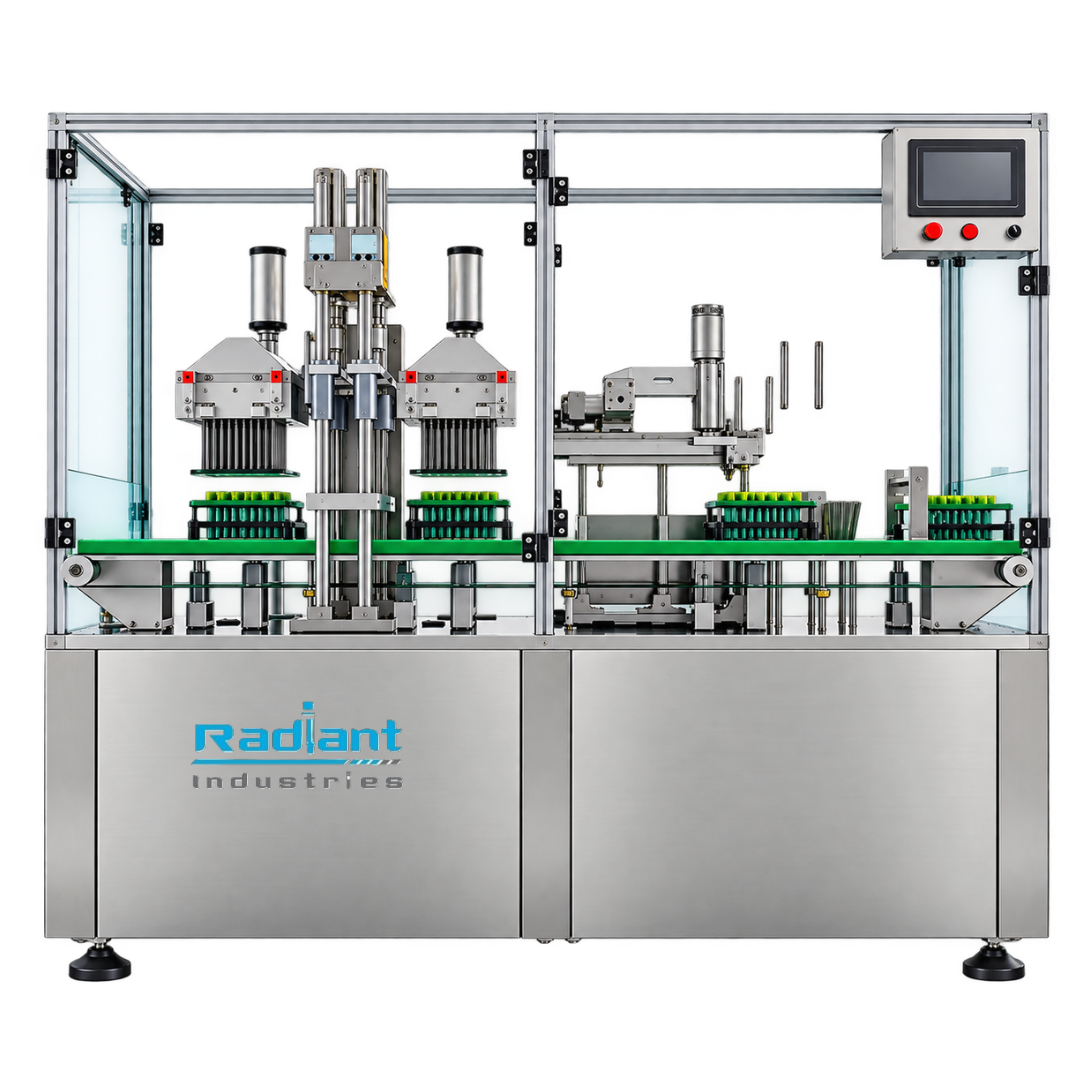
The Semi-Automatic Blood Collection Tube (BCT) Machine is designed for the efficient manufacturing and processing of blood collection tubes used in diagnostic laboratories, hospitals, and healthcare facilities. The machine supports essential operations such as tube loading, additive dosing, cap placement, and vacuum generation, depending on the selected configuration. Its semi-automatic design combines operator control with automated functions to ensure consistent processing and reliable production performance.
-
Engineered for flexibility and ease of operation, the machine is suitable for small- to medium-scale production requirements. It offers controlled processing, user-friendly operation, and reduced manual handling during critical manufacturing stages. The system can be configured for different tube sizes and additive requirements, including EDTA, Heparin, and Sodium Citrate applications, according to the machine specifications.
Test Tube Loading
Test Tube Loading: –
Empty blood collection tubes are manually or semi-automatically loaded into the designated tube holders or loading racks. The operator ensures that the tubes are correctly positioned before starting the production cycle.
The loading system keeps the tubes organized and aligned for subsequent processing. Proper positioning helps minimize handling errors and supports smooth movement between operating stations.
Before processing begins, the operator checks the tubes for visible damage, contamination, or incorrect placement. This initial inspection helps maintain consistent production quality.
Chemical Coating / Additive Spraying
Chemical Coating / Additive Spraying : –
The loaded tubes are transferred to the chemical coating station, where the required additives are applied to the internal surfaces. Depending on the tube type, additives may include EDTA, K2-EDTA, K3-EDTA, Heparin, or Clot Activator.
The dosing system sprays or dispenses the specified quantity of additive according to the selected production parameters. Controlled application helps maintain consistency between tubes and supports the intended performance of the blood collection products.
The operator can monitor the dosing operation and verify the additive quantity according to the established procedure. Correct dosing parameters are important for maintaining product quality and ensuring that the tubes meet their intended specifications.
Drying Process
Drying Process : –
After additive application, the tubes proceed to the drying station. This stage removes moisture from the internal coating, helping prepare the tubes for subsequent cap placement and sealing operations.
Depending on the machine configuration, drying may use heated air, controlled heating elements, or an air circulation system. The drying temperature, duration, and airflow are adjusted according to the additive type and tube specifications.
The operator monitors the drying process to ensure that the required conditions are maintained. Proper drying helps achieve consistent coating characteristics and supports the quality of the finished blood collection tubes.
Rubber Stopper and Cap Assembly
Rubber Stopper and Cap Assembly: –
Rubber stoppers and plastic caps are prepared for assembly before being fitted onto the processed tubes. Depending on the machine configuration, components may be assembled manually or through a semi-automatic cap assembly mechanism.
The operator positions the components correctly to ensure that the rubber stopper and cap are properly aligned. Consistent assembly helps prevent incorrect placement and supports reliable closure during the sealing process.
Once the components are prepared, the caps are placed onto the corresponding tubes. The assembled tubes are then transferred to the vacuum generation and cap pressing station.
Vacuum Generation and Cap Pressing
Vacuum Generation and Cap Pressing: –
The tubes with positioned caps are placed into the vacuum sealing system. The machine generates the required vacuum level inside the tubes according to the selected product specifications.
Once the preset conditions are achieved, the cap pressing mechanism secures the caps onto the tubes. Controlled pressing and vacuum generation help produce consistent closures and maintain the specified vacuum characteristics.
The operator monitors the cycle and verifies the process parameters according to the established operating procedure. Proper vacuum control and cap sealing are important for blood collection tube performance and product consistency.
Tube Labeling and Printing
Tube Labeling and Printing: –
After sealing, the tubes are transferred to the labeling station. Labels are applied manually or with the assistance of a semi-automatic labeling mechanism, depending on the machine configuration.
The labels may contain essential product information, including tube type, additive identification, batch number, manufacturing date, expiry date, barcode, and other required details. Printing settings are configured according to the product and labeling requirements.
The operator checks the label position, readability, and printed information before moving the tubes to the packaging stage. Accurate labeling supports product identification, traceability, and organized inventory management.
Tray Loading
Primary Packaging
Primary Packaging
Primary Packaging : –
The loaded trays proceed to the primary packaging stage, where the tubes are prepared for secure handling and further packaging. The packaging method depends on the product requirements and the selected machine configuration.
Depending on the setup, trays may be packed using suitable protective materials, bags, or other specified packaging components. The operator ensures that the packaging material is correctly positioned and that the tubes remain organized inside the trays.
The packaged trays are checked for proper arrangement, visible defects, and packaging integrity before moving to the next stage. Appropriate primary packaging helps protect the products during handling and storage.
Shrink Wrapping
Shrink Wrapping: –
The primary-packed trays are transferred to the shrink-wrapping station. Shrink film is placed around the trays and sealed using the appropriate sealing equipment.
The trays then pass through a shrink tunnel or suitable heating system, depending on the machine configuration. Controlled heat causes the film to contract around the package, creating a neat and secure outer wrap.
The operator checks the finished packages for uniform film coverage, proper sealing, and visible packaging defects. Shrink wrapping helps keep the packaged trays together and supports convenient handling, storage, and transportation.
Finished Product Collection
Finished Product Collection : –
After shrink wrapping, the packaged trays are collected at the machine discharge area. The operator performs a final visual inspection to check the package condition, labeling, and overall presentation.
Accepted products are transferred to carton packing, where the trays are arranged according to the required packaging configuration. Batch details and relevant production records are verified to support traceability.
Finally, the finished cartons are moved to the designated storage area before dispatch. Proper handling, storage, and inventory control help maintain product organization and readiness for distribution.
Always Ready to Serve!
Radiant Industries is committed to delivering quality, innovation, and reliability across every project we undertake.