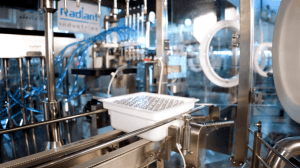

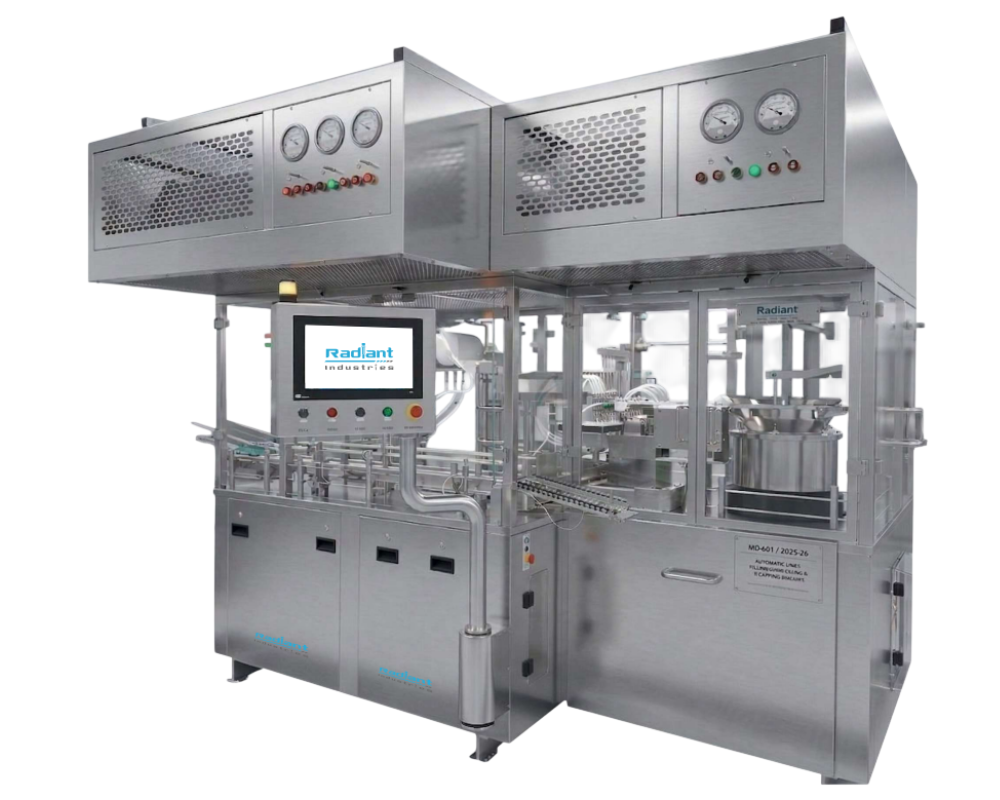
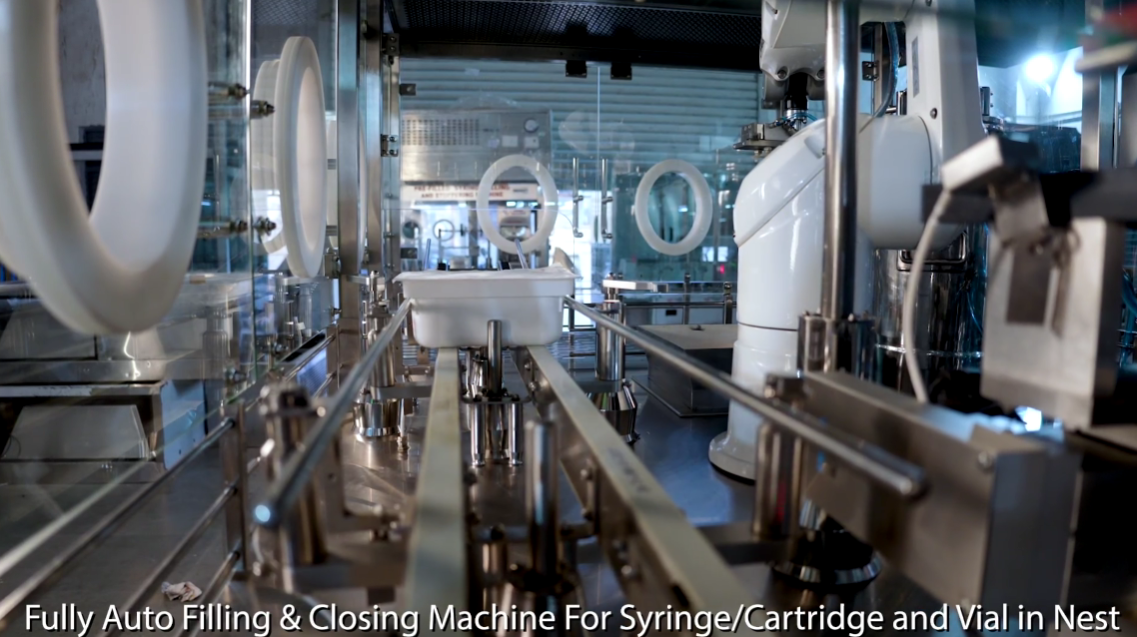
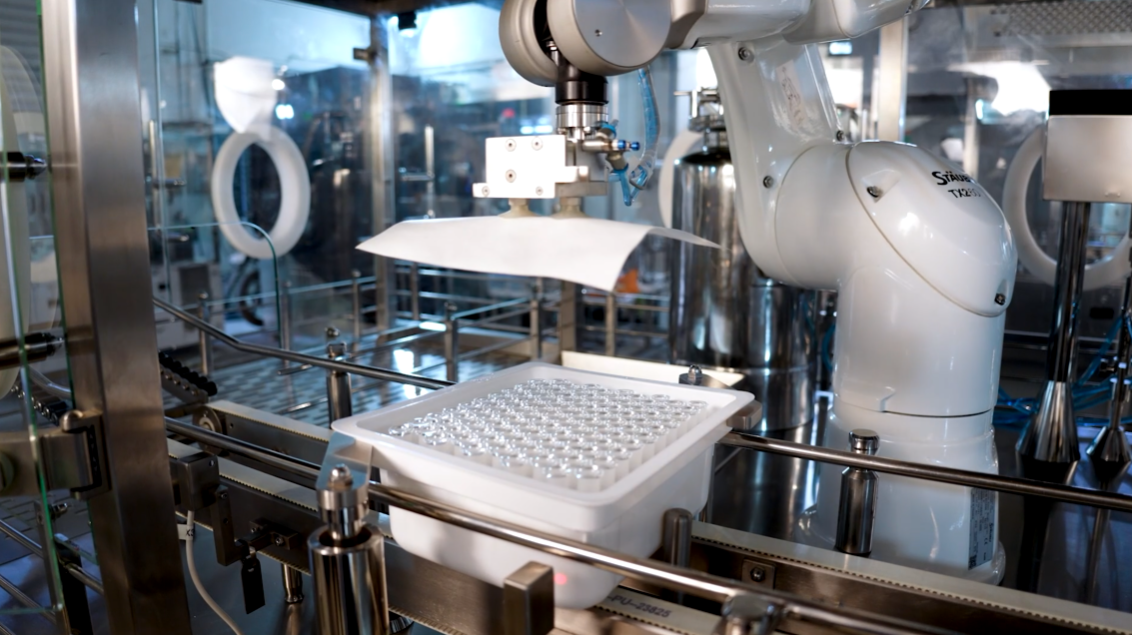


The Fully Automatic Filling and Closing Machine for Syringe in Nest begins its operation with the precise positioning of the sterile syringe tub at the Tyvek removal station. The syringe tub, containing the pre-sterilized syringe nest and sealed with a Tyvek membrane and protective plastic lid, is automatically transferred from the upstream conveyor to the machine’s infeed section. The transfer process is carefully synchronized using a servo-driven conveyor system that ensures smooth, vibration-free movement while maintaining the sterility and integrity of the pharmaceutical components. As the tub enters the loading area, precision guide rails accurately direct it into the designated positioning station, preparing it for the Tyvek removal process. This automated positioning eliminates manual handling, reduces the possibility of contamination, and establishes a reliable foundation for all subsequent filling and closing operations.
Once the syringe tub reaches the Tyvek removal station, the machine utilizes a combination of high-precision sensors, servo indexing mechanisms, and pneumatic positioning units to verify the exact location of the tub. Photoelectric sensors confirm the presence of the tub, while proximity sensors and mechanical locating pins ensure that it is correctly aligned in both the X and Y axes. The intelligent control system continuously compares the actual tub position with predefined machine parameters and automatically performs fine adjustments whenever necessary. This precise positioning is essential because even a slight deviation can affect the accuracy of Tyvek peeling, nest transfer, liquid filling, and stopper insertion. By maintaining micron-level positioning accuracy, the machine ensures consistent processing quality throughout continuous production.
During the positioning sequence, the syringe tub is securely held in place using precision clamping mechanisms that prevent unwanted movement during the Tyvek removal operation. These clamps apply controlled holding force to stabilize the tub without causing deformation or damage to the packaging. At the same time, the servo indexing system synchronizes the movement of the conveyor with the machine’s operating cycle, ensuring seamless coordination between the loading section and the Tyvek removal station. This intelligent synchronization enables the machine to achieve high production speeds while maintaining exceptional positioning accuracy and repeatability for every syringe tub processed.
The positioning operation is fully automated and continuously monitored by the machine’s Programmable Logic Controller (PLC) and Human Machine Interface (HMI). Before the Tyvek removal cycle begins, the control system verifies multiple process parameters, including tub presence, orientation, alignment, and clamping status. If any abnormal condition is detected—such as incorrect positioning, missing tubs, or conveyor interruption—the machine immediately pauses the production cycle and displays an alarm on the HMI for operator attention. This built-in safety verification prevents processing errors, protects sterile pharmaceutical products, minimizes material waste, and ensures compliance with stringent GMP and aseptic manufacturing standards.
Designed specifically for pharmaceutical cleanroom applications, the Tub Positioning at Tyvek Removal Station is constructed entirely from high-quality stainless steel and hygienic, corrosion-resistant components. The smooth, easy-to-clean surfaces minimize particle generation and simplify routine cleaning and sanitization procedures, making the system suitable for ISO-classified cleanroom environments. By combining intelligent automation, precision motion control, and advanced sensor technology, this initial positioning stage provides the stability and accuracy required for reliable Tyvek removal, ensuring that every syringe tub enters the filling process under identical, sterile, and perfectly aligned conditions. As the first operation of the filling and closing machine, it plays a critical role in maximizing productivity, maintaining product quality, and ensuring uninterrupted pharmaceutical manufacturing.
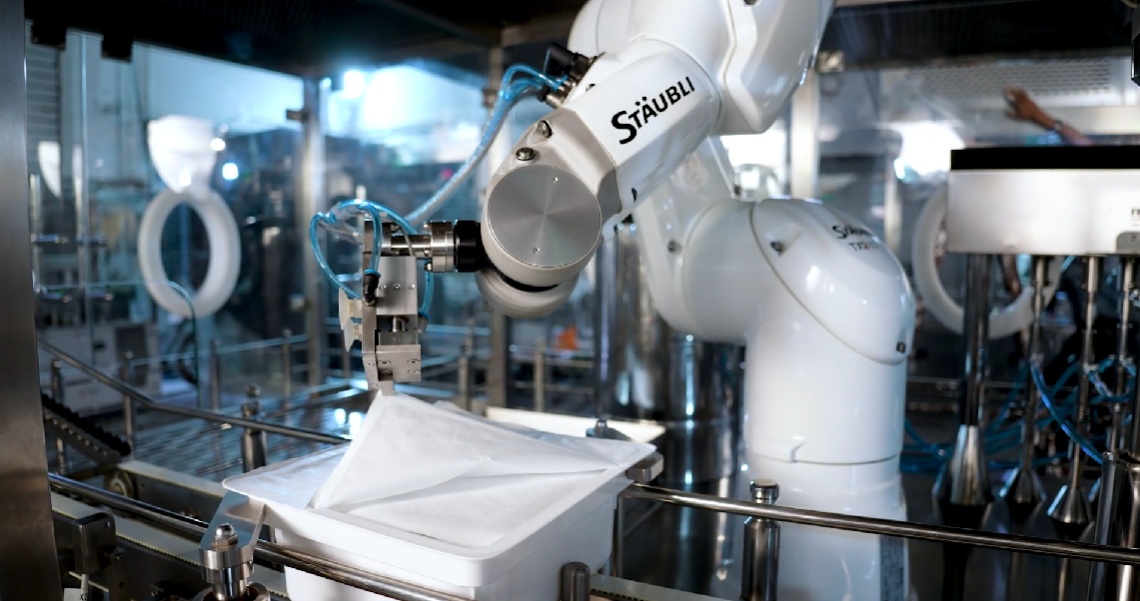
Following the accurate positioning of the syringe tub, the machine automatically initiates the Tyvek and lid removal process. The syringe tub is sealed with a Tyvek membrane and protected by a rigid plastic lid to maintain the sterility of the pre-sterilized syringes during transportation and storage. At the Tyvek removal station, the machine carefully grips the edge of the Tyvek seal and the plastic lid using specially designed vacuum suction cups and precision gripping mechanisms. The entire operation is performed automatically without manual intervention, ensuring that the sterile environment inside the tub remains protected throughout the opening process.
The Tyvek peeling mechanism is controlled by high-precision servo motors that regulate the peeling angle, pulling speed, and separation force. These parameters are carefully optimized to remove the Tyvek membrane smoothly without tearing or leaving any residue on the tub. Simultaneously, the plastic lid is lifted and separated in a synchronized motion, preventing sudden movements that could disturb the syringe nest. The controlled peeling action minimizes particle generation and protects the sterility of the pharmaceutical components contained within the tub.
Throughout the removal process, advanced sensors continuously monitor the peeling operation to verify complete removal of both the Tyvek membrane and the plastic lid. If incomplete peeling, excessive resistance, or abnormal movement is detected, the PLC immediately stops the cycle and alerts the operator through the Human Machine Interface (HMI). This intelligent monitoring system prevents processing errors while ensuring that only properly opened tubs proceed to the filling station. Such automated verification significantly improves production reliability and reduces the possibility of rejected products.
After successful removal, the discarded Tyvek membrane and plastic lid are automatically transferred to the machine’s waste disposal system. Pneumatic ejectors or vacuum-assisted collection units transport the waste into an enclosed collection bin, preventing contamination of the cleanroom environment. This automatic waste handling eliminates manual disposal, reduces housekeeping requirements, and supports continuous production without interruption. Constructed from pharmaceutical-grade stainless steel with GMP-compliant hygienic surfaces, the Tyvek removal station provides consistent, reliable, and contamination-free operation while preparing the syringe nest for the next stage of the filling process.


Once the protective Tyvek membrane and plastic lid have been successfully removed, the open syringe tub is automatically transferred to the filling station. The transfer operation is performed using a servo-driven conveyor system designed to move the tub smoothly while maintaining precise positioning. Every movement is synchronized with the machine’s production cycle, ensuring seamless integration between the opening section and the filling module. The stable transfer mechanism prevents vibration, impact, or sudden acceleration that could affect the alignment of the syringe nest.
The machine utilizes precision guide rails, indexing mechanisms, and servo-controlled positioning units to maintain accurate orientation of the syringe tub throughout transportation. Integrated sensors continuously monitor tub movement and confirm successful arrival at the filling station before the next operation begins. If the control system detects any positional deviation or conveyor interruption, the machine immediately pauses the production cycle to prevent processing errors and maintain product quality.
Because pharmaceutical syringes require extremely accurate filling, maintaining stable positioning during transfer is essential. The automated conveyor system minimizes mechanical stress while ensuring that every syringe nest reaches the filling station in an identical position. This repeatable positioning enables the filling nozzles to align perfectly with each syringe barrel, improving filling accuracy and reducing product loss. Automated handling also eliminates unnecessary operator contact with sterile products, further reducing contamination risks.
The transfer process is fully enclosed within the machine’s aseptic working area and is designed to comply with international pharmaceutical manufacturing standards. Stainless steel construction, hygienic surfaces, and cleanroom-compatible components ensure easy cleaning and long-term reliability. By combining intelligent motion control with precision automation, the Transfer to Filling Station stage creates a smooth transition between packaging removal and pharmaceutical filling while supporting continuous, high-speed production.

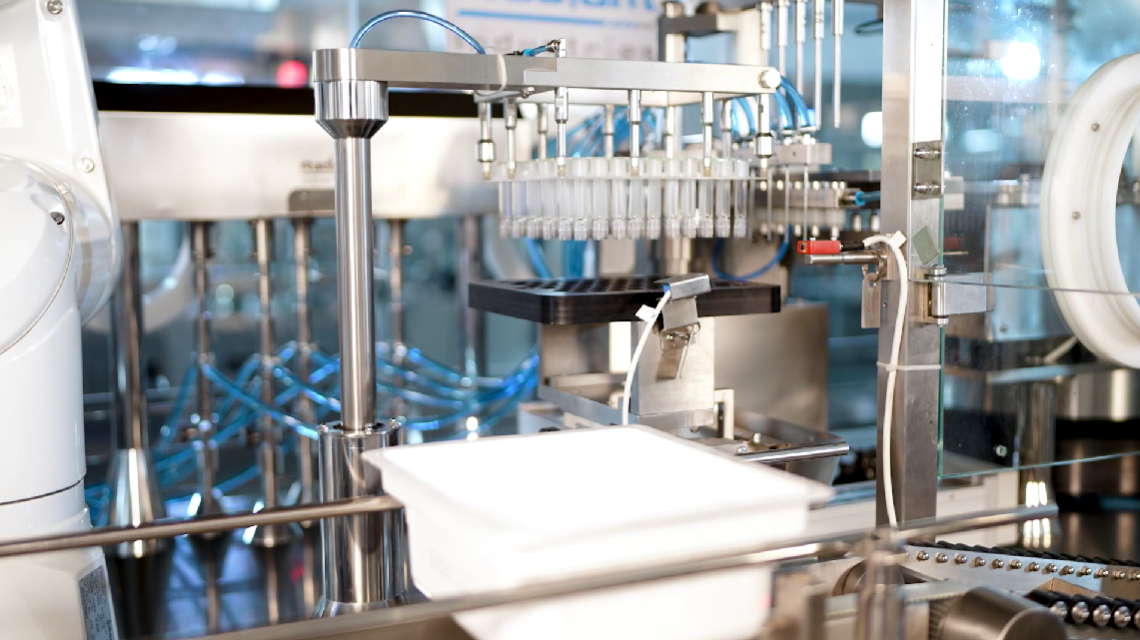
After arriving at the filling station, the syringe nest is automatically separated from the outer tub and transferred to the precision filling table. This operation is performed using a highly accurate lifting and transfer mechanism equipped with servo-controlled actuators, vacuum grippers, or robotic handling systems. The transfer system gently lifts the syringe nest while maintaining its original orientation, ensuring that every syringe remains securely positioned throughout the process.
Once lifted, the syringe nest is accurately positioned onto the filling table using precision locating pins and indexing guides. The filling table is engineered to provide stable support and micron-level positioning accuracy for every syringe. This precise alignment is critical because the filling nozzles must enter each syringe barrel with exceptional accuracy to achieve consistent dosing. Even minor positional deviations can affect filling performance, making this transfer operation one of the most important stages in the production process.
The entire transfer sequence is continuously monitored by intelligent sensors that verify nest presence, positioning, and successful placement on the filling table. If any irregularity is detected, such as incomplete transfer or improper alignment, the machine immediately stops and alerts the operator through the HMI. This automated verification protects the syringes from mechanical damage while ensuring reliable downstream filling and stoppering operations.
Designed specifically for aseptic pharmaceutical manufacturing, the nest transfer mechanism minimizes manual handling and maintains sterile conditions throughout the process. Its synchronized servo motion provides smooth, vibration-free movement while reducing cycle time and improving production efficiency. By ensuring precise positioning of every syringe nest, this stage establishes the foundation for accurate filling, consistent product quality, and reliable high-speed operation.

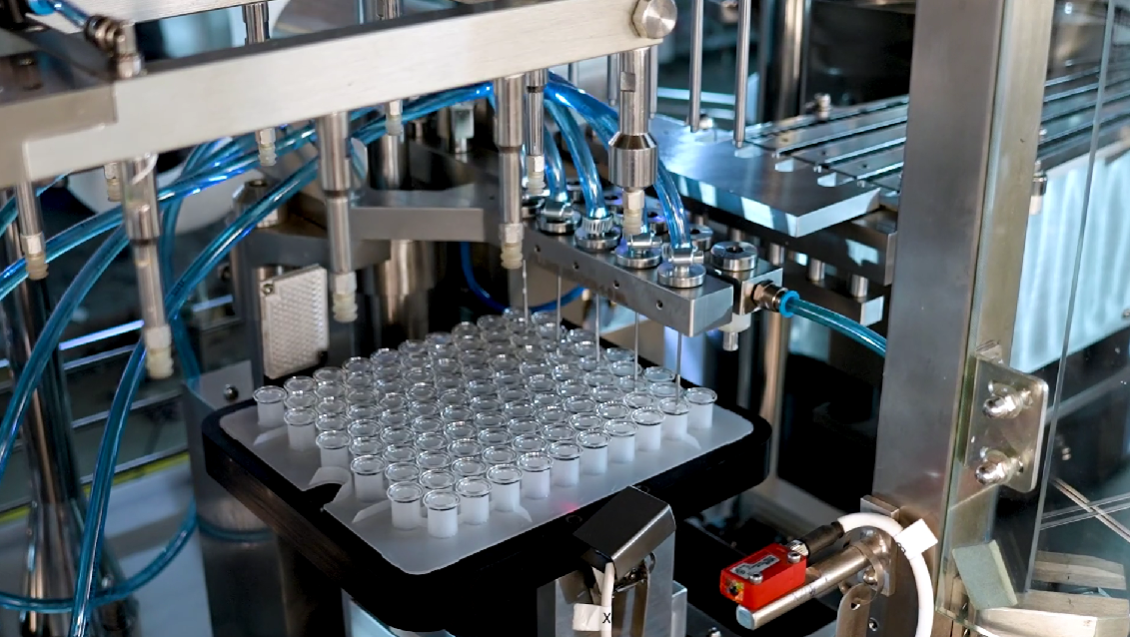
The Simultaneous Filling and Stoppering stage represents the core operation of the Fully Automatic Filling and Closing Machine for Syringe in Nest. Once the syringe nest has been accurately positioned beneath the filling station, precision filling nozzles descend into each syringe barrel. Using high-accuracy servo pumps or piston dosing systems, the machine dispenses the predetermined volume of pharmaceutical liquid into every syringe under controlled aseptic conditions. The filling system is designed to achieve exceptional dosing accuracy while minimizing foaming, splashing, and product loss.
Immediately after filling, the machine performs automatic stopper placement in the same production cycle. Rubber stoppers are fed through an automated bowl feeder and orientation system before being transferred to the insertion mechanism. Precision insertion heads place the stoppers into each filled syringe using carefully controlled insertion force, ensuring secure closure without damaging the syringe components. The synchronized filling and stoppering operation significantly reduces production time while maintaining product sterility.
Throughout the filling process, the machine continuously monitors critical parameters such as fill volume, filling pressure, nozzle position, and stopper placement. Advanced sensors and PLC-controlled automation verify that every syringe has been correctly filled and closed before allowing the cycle to continue. Any abnormal condition, including missing stoppers, incorrect fill volume, or nozzle obstruction, immediately triggers an alarm and pauses production to prevent defective products from reaching downstream operations.
Engineered for high-speed pharmaceutical manufacturing, the filling and stoppering module combines precision automation, intelligent process control, and GMP-compliant hygienic design. Stainless steel construction, CIP/SIP compatibility, and cleanroom-certified components ensure reliable long-term performance while maintaining aseptic processing conditions. This synchronized operation delivers outstanding filling accuracy, improved productivity, and consistently high pharmaceutical product quality.

Following successful filling and stoppering, the machine automatically transfers the completed syringe nest back into its original plastic tub. Precision lifting mechanisms gently raise the filled nest from the filling table and transport it to the waiting tub using synchronized servo-controlled motion. The transfer is performed with exceptional care to prevent vibration or movement that could disturb the filled syringes or compromise stopper positioning.
The machine utilizes precision alignment guides and positioning pins to ensure that the syringe nest is accurately seated within the tub. Integrated sensors continuously monitor the transfer process and confirm successful placement before allowing the production cycle to proceed. This automated verification prevents incomplete seating, product damage, and potential handling errors while maintaining consistent production quality.
Because the syringes have already been filled with sterile pharmaceutical products, minimizing manual handling during this stage is essential. Automated nest return significantly reduces contamination risks while preserving the integrity of both the syringes and the pharmaceutical solution. Controlled movement also protects delicate syringe components from mechanical stress, ensuring safe downstream transportation and packaging.
Designed for continuous pharmaceutical production, the return mechanism provides reliable, repeatable operation while supporting high production speeds. Its hygienic stainless-steel construction and precision automation contribute to improved operational efficiency, reduced downtime, and consistent product quality throughout long manufacturing cycles.
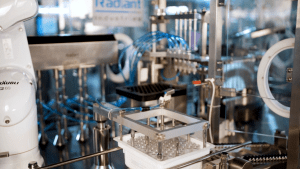
The final stage of the Fully Automatic Filling and Closing Machine involves the automatic discharge of the completed syringe tub. After the syringe nest has been successfully returned to the tub and all process verification checks have been completed, the machine transfers the filled tub to the discharge conveyor. Servo-controlled handling systems ensure smooth, vibration-free movement while maintaining product stability during transportation.
Before discharge, the machine performs a final verification of production parameters, including tub presence, completed filling cycle, stopper placement confirmation, and successful nest positioning. The PLC verifies that every processing stage has been completed successfully before releasing the tub to downstream equipment. If any abnormal condition is detected, the machine automatically isolates the affected tub and notifies the operator through the HMI, preventing defective products from entering the packaging process.
The discharged syringe tubs are automatically transferred to subsequent pharmaceutical operations such as visual inspection, labeling, secondary packaging, freeze-drying, or robotic palletizing. Because the transfer process is fully synchronized with downstream equipment, production continues without interruption while maintaining consistent throughput. Automated discharge also reduces manual handling, improving both operational efficiency and aseptic process integrity.
Manufactured using GMP-compliant stainless steel construction and pharmaceutical-grade automation components, the discharge system is designed for long-term reliability, minimal maintenance, and cleanroom compatibility. As the final stage of the filling and closing process, the Discharge of Filled Tub operation ensures that every finished syringe tub leaves the machine safely, efficiently, and ready for the next stage of pharmaceutical manufacturing, completing the fully automated production cycle with maximum accuracy, sterility, and productivity.