

BCT Sodium Citrate Dosing Machine
Operational Process
-
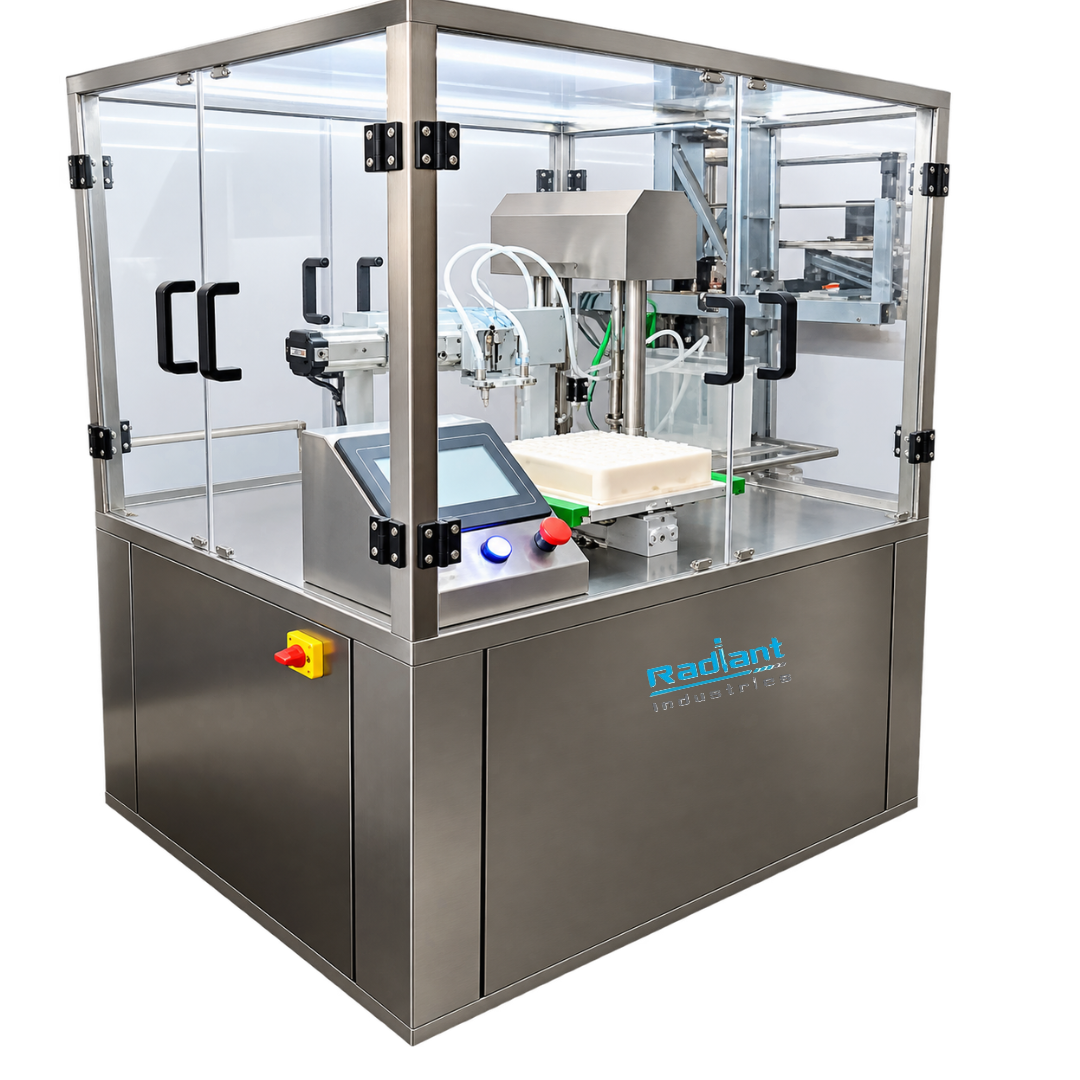
The Sodium Citrate Dosing Machine is a fully automatic, high-precision liquid dosing system designed to dispense a predetermined volume of Sodium Citrate anticoagulant solution into blood collection tubes. The machine ensures accurate dosing, excellent repeatability, and contamination-free operation while complying with GMP requirements. Sodium citrate is commonly used in coagulation blood collection tubes to prevent blood clotting by binding calcium ions.
Empty Tube Infeed: –
The empty tube infeed process transfers empty blood collection tubes from the upstream conveyor to the Sodium Citrate dosing machine. The tubes are fed into the machine in a controlled sequence to maintain a continuous and organized production flow.
A servo-driven indexing system moves the tubes into precision holders, ensuring that each tube is positioned correctly for the subsequent dosing operation. The indexing mechanism helps maintain consistent spacing and accurate movement between processing stations.
Tube presence sensors detect whether a tube is available at the dosing position. This detection helps prevent dosing into empty holders and supports reliable machine operation by ensuring that the tubes are correctly positioned before the filling cycle begins.
Tube Positioning: –
The tube positioning process accurately aligns each blood collection tube beneath the dosing nozzles. Correct positioning is essential for delivering the Sodium Citrate solution into the tubes while minimizing splashing, spillage, and dosing errors.
The servo-controlled indexing mechanism moves each tube to its designated filling position. The system maintains consistent alignment between the tube opening and the dosing nozzle to support uniform and repeatable additive filling.
Tube presence sensors verify that a tube is available at the required position before dosing starts. If a tube is missing or incorrectly positioned, the machine can inhibit the dosing cycle according to its control logic, helping reduce solution wastage and improve process reliability.
Sodium Citrate Solution Feeding: –
The Sodium Citrate solution feeding system supplies the required additive to the dosing machine. The solution is stored in a GMP-compatible SS316L stainless steel storage tank designed to support hygienic handling and suitability for the intended manufacturing process.
The storage tank can be equipped with a low-level sensor, level indicator, sanitary piping, and an agitator where required by the solution characteristics and process specifications. These features help operators monitor the solution supply and maintain appropriate handling conditions throughout production.
The Sodium Citrate solution is transferred from the storage tank to the dosing manifold through suitable hygienic tubing or piping. A consistent supply helps ensure that the dosing system receives the required solution for accurate filling, while the tank and transfer system should be designed for effective cleaning and maintenance.
Precision Liquid Dosing: –
The precision liquid dosing process dispenses a programmed volume of Sodium Citrate solution into each blood collection tube. Servo-controlled piston pumps or other suitable precision metering pumps deliver the required quantity according to the selected tube specifications and manufacturing parameters.
Multiple dosing heads can be integrated into the machine to fill several tubes simultaneously, helping increase production throughput. The dosing volume, filling sequence, and other relevant operating parameters can be adjusted through the Human-Machine Interface (HMI), depending on the machine configuration and validated process requirements.
The dosing nozzles may incorporate anti-drip and suck-back mechanisms to minimize residual dripping after dispensing. These features help reduce solution wastage, maintain a cleaner filling area, and limit the risk of contamination between dosing positions when supported by appropriate hygienic design and operating procedures.
Dose Verification (Optional): –
The optional dose verification system checks whether the Sodium Citrate solution has been dispensed into the tubes as required. Depending on the machine configuration, integrated sensors or weighing systems can be used to verify additive presence, assess dosing volume, or monitor filling consistency.
During operation, the verification system evaluates the available measurement or sensor signals against predefined acceptance criteria. If an abnormal condition is detected, such as missing additive or a dosing value outside the configured limits, the system can generate an alarm for operator attention.
Where automatic rejection is integrated, tubes identified as non-conforming can be diverted from the accepted product flow. This optional function helps strengthen process monitoring, reduce the risk of undetected dosing errors, and support consistent production quality.
Tube Discharge: –
The tube discharge process transfers successfully dosed blood collection tubes from the dosing station to the downstream conveyor. After completion of the programmed filling cycle, the indexing or transfer mechanism moves the tubes away from the dosing position in a controlled manner.
The discharged tubes are transferred to the next stage of the production line according to the selected manufacturing configuration. Subsequent operations may include drying, where required, followed by stoppering, vacuum generation, capping, labeling, inspection, or packaging.
Automatic tube discharge supports continuous production and reduces the need for manual handling between processing stages. Proper coordination between the dosing machine and downstream equipment helps maintain a smooth transfer of tubes and improves overall line efficiency.
Always Ready to Serve!
Radiant Industries is committed to delivering quality, innovation, and reliability across every project we undertake.