



Load the Bagged Syringe Tub: –
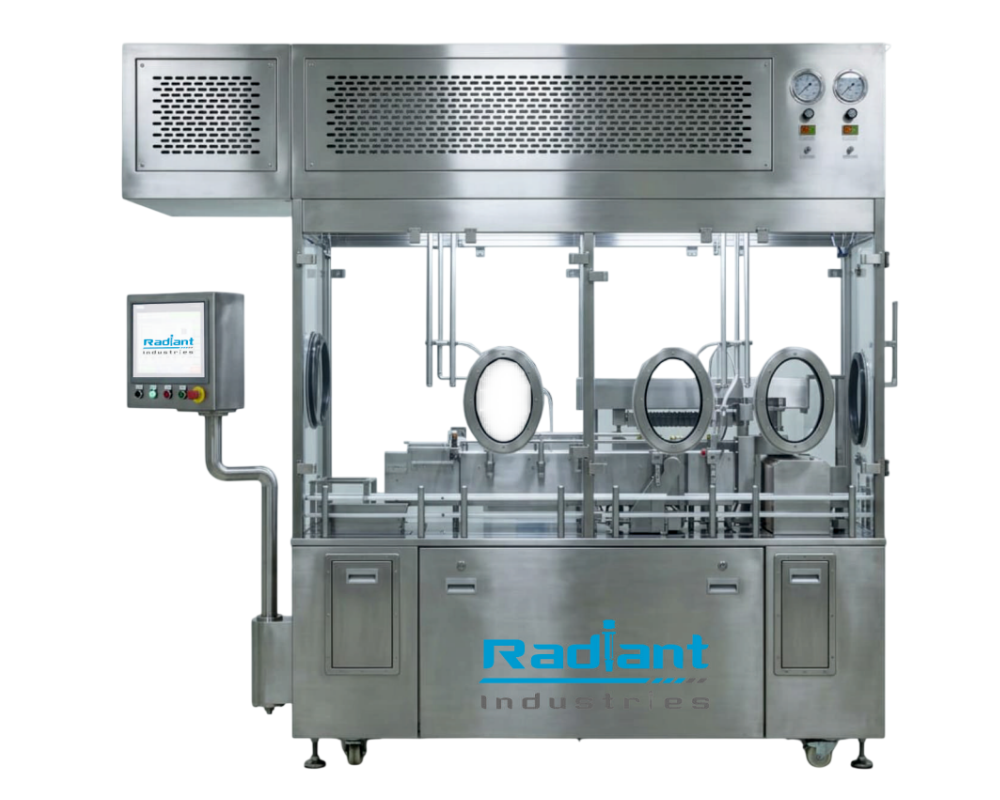
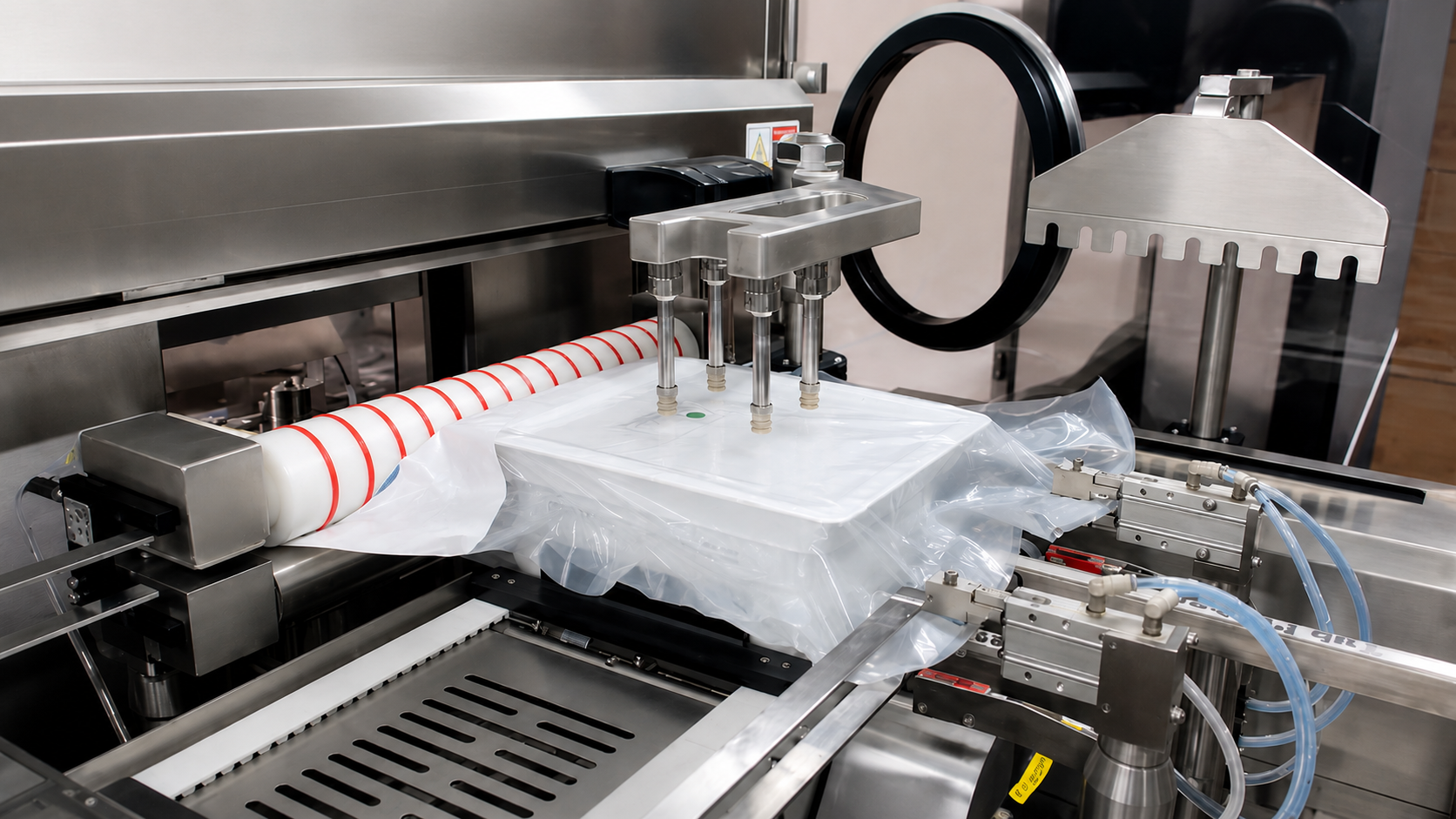
The Automatic Syringe Tub De-Bagging Machine begins its operation with the loading of the sterilized syringe tub, which is securely sealed inside a protective outer plastic bag. This packaging plays a critical role in maintaining the sterility of the syringe tubs during transportation, storage, and handling before they enter the pharmaceutical production line. The operator carefully places the bagged syringe tub onto the machine’s infeed conveyor or loading station. Depending on the system configuration, this loading process can be performed manually or through an automated conveyor integrated with upstream handling equipment. The loading platform is designed to hold the tub securely and ensure smooth movement into the de-bagging process without disturbing the sterile contents.
Once the syringe tub is positioned on the conveyor, the machine automatically detects its presence using advanced sensors such as photoelectric sensors, proximity sensors, or vision-based detection systems. These sensors instantly verify that a tub has been correctly placed and initiate the automated de-bagging sequence. The detection system also confirms the orientation and position of the tub, ensuring that every subsequent operation is carried out with maximum precision. If the tub is incorrectly positioned or absent, the machine immediately generates an alarm or pauses the process, preventing errors and protecting both the equipment and the sterile product.
After successful detection, the machine gently transfers the bagged syringe tub into the indexing section. A precision-controlled conveyor system moves the tub at a regulated speed while maintaining accurate alignment throughout the process. Servo-driven mechanisms ensure smooth transportation without sudden movements or vibration, preventing any damage to the syringe tub or its protective packaging. This controlled movement is especially important in pharmaceutical manufacturing, where product integrity and sterility must be maintained at every stage of production.
The loading and detection stage is designed to minimize manual intervention and eliminate the possibility of human handling errors. By automating the identification and positioning of each syringe tub, the machine improves operational efficiency, reduces production downtime, and ensures consistent processing regardless of operator experience. Every loaded tub enters the system under identical conditions, creating a reliable foundation for the subsequent bag positioning, cutting, and removal operations. This consistency significantly enhances the overall performance of the automated production line.
In aseptic pharmaceutical manufacturing environments, maintaining cleanliness and preventing contamination are top priorities. Therefore, the loading section of the Automatic Syringe Tub De-Bagging Machine is manufactured using high-grade stainless steel with smooth, easy-to-clean surfaces that comply with GMP and cleanroom requirements. The hygienic design minimizes particle generation and allows easy cleaning and sanitization. As a result, the machine not only ensures safe handling of sterile syringe tubs but also supports continuous, high-speed production while preserving the sterility required for downstream filling and packaging processes.

Automatic Bag Positioning: –
After the syringe tub has been successfully loaded and detected, the Automatic Syringe Tub De-Bagging Machine initiates the bag positioning process. This stage is critical because the accuracy of the subsequent cutting and bag removal operations depends entirely on the precise alignment of the outer plastic bag. The machine automatically transfers the bagged syringe tub into the positioning station, where advanced indexing mechanisms ensure that the tub is held firmly in the correct location. By accurately positioning each tub before cutting begins, the machine guarantees consistent performance, minimizes processing errors, and maintains the integrity of the sterile packaging.
To achieve exceptional positioning accuracy, the machine utilizes a combination of servo-driven indexing systems, precision guides, pneumatic clamps, and intelligent sensors. These components work together to detect the exact dimensions and orientation of the syringe tub while gently securing it without causing any deformation or damage. The automatic positioning system continuously monitors the location of the tub and adjusts its alignment whenever necessary. This intelligent correction mechanism ensures that every syringe tub reaches the cutting station in an identical position, regardless of minor variations that may occur during loading or transportation.
During the positioning process, the outer plastic bag is carefully stretched and stabilized to eliminate wrinkles, folds, or unwanted movement. Specialized guiding mechanisms ensure that the plastic bag remains properly tensioned and aligned, allowing the cutting blade to follow a predetermined cutting path with maximum precision. By eliminating misalignment and maintaining consistent bag positioning, the machine significantly reduces the risk of incomplete cuts, torn packaging, or accidental contact with the sterile syringe tub. This controlled handling is especially important in pharmaceutical manufacturing, where maintaining product sterility and packaging integrity is essential.
The positioning sequence is fully automated and operates within milliseconds, enabling continuous high-speed production without compromising accuracy. Integrated sensors constantly verify the position of both the syringe tub and the protective bag before permitting the machine to proceed to the cutting stage. If the system detects any deviation from the required position, it automatically pauses the cycle and alerts the operator through the Human Machine Interface (HMI). This built-in verification process enhances operational safety, prevents product damage, reduces material waste, and ensures reliable performance throughout extended production runs.
Designed for cleanroom and GMP-compliant pharmaceutical environments, the bag positioning system is engineered to provide repeatable precision while minimizing manual intervention. Its robust mechanical construction, combined with intelligent automation, allows the machine to process large volumes of syringe tubs with exceptional consistency and reliability. By ensuring that every syringe tub is perfectly aligned before cutting, the Automatic Syringe Tub De-Bagging Machine creates a stable and dependable foundation for the next stage of the process—Automatic Bag Cutting—thereby improving productivity, protecting sterile products, and supporting uninterrupted pharmaceutical manufacturing operations.

Automatic Bag Cutting: –
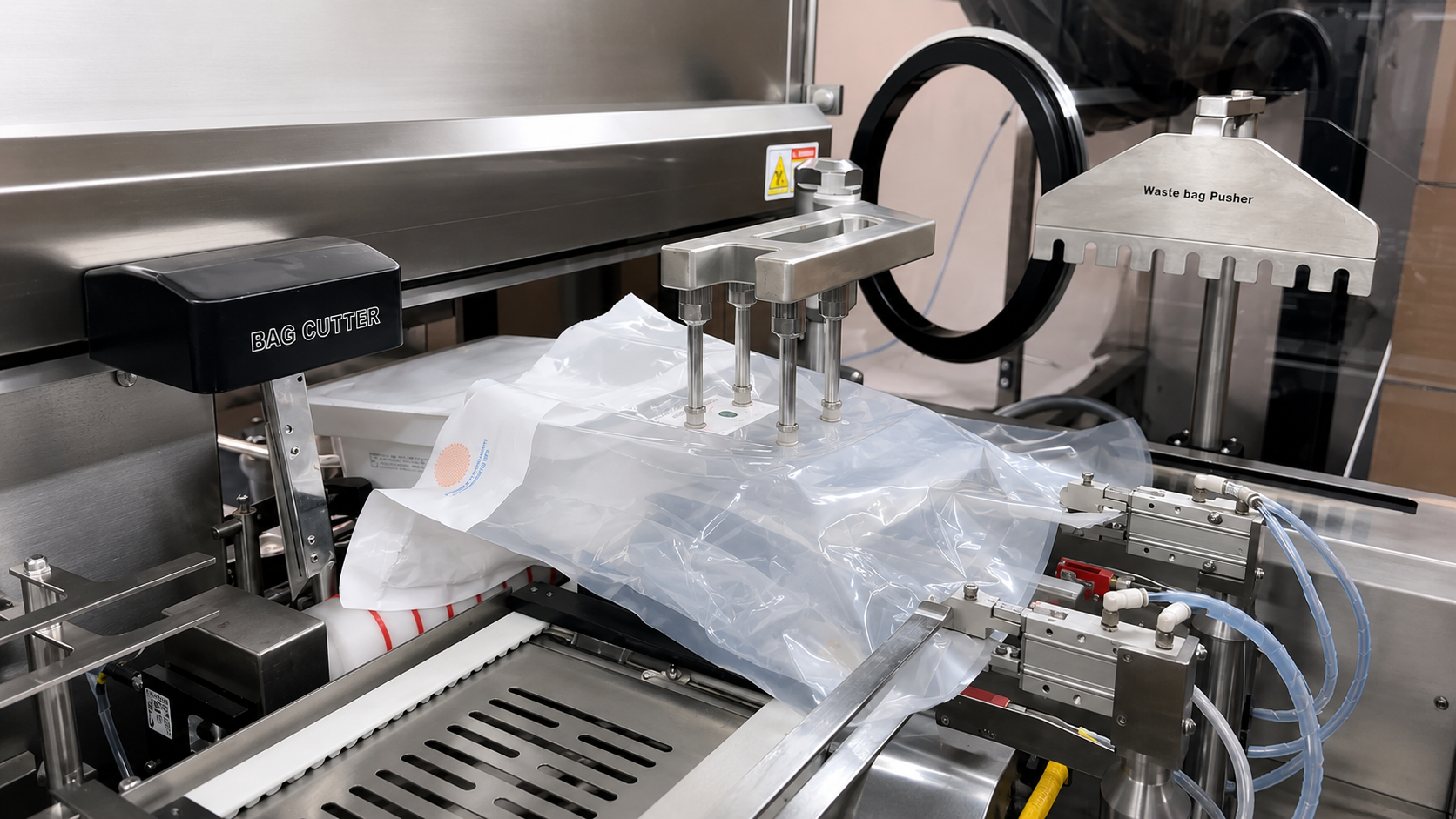
Once the syringe tub and its protective outer bag have been accurately positioned, the Automatic Syringe Tub De-Bagging Machine proceeds to the bag cutting stage. This is one of the most critical operations in the de-bagging process, as it determines the efficiency and safety of the entire system. The machine activates its precision cutting mechanism to make a clean, controlled incision in the outer plastic bag while ensuring that the sterile syringe tub inside remains completely untouched. Every cutting cycle is executed with exceptional accuracy, allowing the packaging to be opened without compromising the integrity of the sterile contents.
The cutting mechanism is engineered using high-precision blades or specially designed cutting tools that operate along a predefined cutting path. Servo-controlled motion systems ensure that the blade follows the exact position of the plastic bag, delivering consistent cutting performance regardless of production speed. Since the cutting tool only contacts the outer packaging, there is no risk of damaging the syringe tub or affecting its sterile condition. This precision is essential in pharmaceutical manufacturing, where even the smallest packaging error can lead to contamination risks or product rejection.
During the cutting operation, multiple sensors continuously monitor the blade position, cutting depth, and tub alignment. The machine verifies that every parameter is within the specified tolerance before and during the cutting cycle. If any abnormal condition is detected, such as improper alignment or excessive resistance, the machine automatically stops the operation and alerts the operator through the Human Machine Interface (HMI). This intelligent monitoring system protects both the equipment and the pharmaceutical product while reducing downtime and minimizing material waste.
The cutting process is completed within seconds, enabling the machine to maintain high production throughput without sacrificing precision. Because every cut is clean and consistent, the outer bag can be easily separated during the next stage of the process. This automated cutting technology eliminates the need for manual blade handling, improves operator safety, and ensures repeatable performance across thousands of production cycles. As a result, pharmaceutical manufacturers benefit from higher productivity, improved product quality, and reliable compliance with GMP and aseptic processing standards.
The cutting assembly is constructed using corrosion-resistant stainless steel and pharmaceutical-grade components that are suitable for cleanroom environments. Its hygienic design allows for easy cleaning, routine maintenance, and long-term durability, ensuring dependable performance even under continuous industrial operation. By combining precision engineering with intelligent automation, the Automatic Bag Cutting stage prepares the syringe tub for safe and efficient bag removal while preserving sterility throughout the manufacturing process.
Automatic Bag Removal: –
Following the successful cutting of the protective outer bag, the Automatic Syringe Tub De-Bagging Machine automatically begins the bag removal process. At this stage, the machine carefully separates the cut plastic bag from the sterile syringe tub without requiring any manual handling. This automated operation is designed to eliminate the possibility of contamination while ensuring that the syringe tub remains stable and undamaged throughout the removal sequence.
The machine utilizes precision pneumatic grippers, vacuum suction systems, or specially designed mechanical pullers to securely grip the cut edges of the plastic bag. These mechanisms apply a controlled pulling force to remove the packaging smoothly and uniformly without disturbing the position of the syringe tub. The movement is precisely synchronized with the conveyor system, ensuring that the bag is removed efficiently while maintaining continuous production flow. Even delicate packaging materials can be handled safely without tearing or leaving residual plastic attached to the tub.
Throughout the bag removal process, integrated sensors continuously monitor the separation of the packaging from the syringe tub. The system verifies that the entire plastic bag has been completely removed before allowing the production cycle to continue. If any portion of the bag remains attached or if an abnormal condition is detected, the machine immediately pauses the operation and notifies the operator through the HMI. This automatic inspection prevents incomplete de-bagging and ensures that only properly processed syringe tubs proceed to the next manufacturing stage.
By automating the bag removal process, the machine significantly reduces manual labor, minimizes operator contact with sterile products, and improves workplace safety. The elimination of manual handling also reduces the risk of accidental contamination, packaging damage, and inconsistencies between production batches. This high level of automation enables pharmaceutical manufacturers to achieve faster processing speeds while maintaining strict quality standards and regulatory compliance.
Designed specifically for aseptic pharmaceutical environments, the bag removal system provides smooth, repeatable, and reliable operation throughout extended production cycles. Its intelligent control system, combined with robust mechanical construction, ensures consistent performance even during high-volume manufacturing. As a result, the Automatic Bag Removal stage enhances production efficiency while protecting the sterility and integrity of every syringe tub entering downstream operations.
Automatic Waste Bag Disposal: –
After the protective plastic bag has been successfully removed from the syringe tub, the Automatic Syringe Tub De-Bagging Machine immediately transfers the discarded packaging to the waste disposal system. Efficient disposal of the removed plastic bag is essential for maintaining a clean, organized, and contamination-free production environment. Rather than allowing waste material to accumulate around the machine, the system automatically separates and directs the packaging into a designated collection area without interrupting production.
The waste disposal mechanism typically consists of pneumatic pushers, conveyor-assisted transfer systems, or gravity-assisted collection units that transport the removed plastic bag into an enclosed waste bin. This automated handling prevents operators from manually collecting discarded packaging during production, reducing unnecessary contact with waste materials and improving workplace hygiene. The enclosed collection system also prevents loose plastic from interfering with machine operation or contaminating the surrounding cleanroom environment.
Sensors integrated within the disposal system continuously monitor the successful transfer of waste materials. The machine confirms that each removed plastic bag has been completely discharged before initiating the next production cycle. If the waste bin approaches its maximum capacity or if a disposal blockage occurs, the system immediately alerts the operator through the Human Machine Interface (HMI). This proactive monitoring minimizes production interruptions and ensures reliable machine performance throughout continuous operation.
The automated waste handling process contributes significantly to operational efficiency by eliminating manual cleaning tasks and reducing production downtime. Since all discarded packaging is collected in a controlled and organized manner, housekeeping becomes faster and more efficient while maintaining compliance with GMP and pharmaceutical cleanroom requirements. The systematic disposal of waste also supports environmental management practices by simplifying waste segregation and recycling procedures where applicable.
Constructed using durable, corrosion-resistant materials, the waste disposal system is designed for long-term reliability and easy maintenance. Its hygienic design allows quick cleaning and straightforward removal of collected waste without affecting adjacent production equipment. By integrating intelligent waste management into the de-bagging process, the machine ensures a cleaner production environment, improved operator safety, and uninterrupted pharmaceutical manufacturing.
Sterile Tub Transfer:-
The final stage of the Automatic Syringe Tub De-Bagging Machine is the transfer of the fully de-bagged sterile syringe tub to the next stage of the pharmaceutical production line. Once the machine confirms that the outer plastic bag has been completely removed and all quality checks have been successfully completed, the sterile tub is automatically released onto the downstream conveyor system. This fully automated transfer eliminates unnecessary manual handling and preserves the sterility of the syringe tub until it reaches the filling or packaging process.
The transfer mechanism utilizes precision conveyor systems, servo-controlled indexing units, and synchronized automation to move each syringe tub smoothly and accurately. Every movement is carefully controlled to prevent vibration, sudden impacts, or misalignment that could affect the stability of the syringes inside the tub. The machine maintains consistent spacing between successive tubs, allowing seamless integration with downstream equipment such as filling machines, robotic handling systems, inspection units, or packaging lines.
Throughout the transfer operation, advanced sensors continuously monitor tub movement, conveyor synchronization, and product flow. The control system verifies that each syringe tub has successfully exited the de-bagging station before initiating the next processing cycle. In the event of downstream equipment stoppage or conveyor congestion, the machine automatically pauses the transfer sequence and resumes operation once normal conditions are restored. This intelligent coordination prevents product accumulation, reduces equipment stress, and maintains smooth production flow across the entire manufacturing line.
By automating the sterile tub transfer process, the machine significantly improves production efficiency while reducing operator involvement in critical aseptic operations. The elimination of manual transport minimizes the risk of contamination, handling errors, and accidental product damage. Continuous, synchronized movement between production stages also increases throughput, reduces cycle times, and enhances overall equipment effectiveness (OEE), making the system ideal for high-volume pharmaceutical manufacturing.
Engineered to meet international pharmaceutical standards, the sterile tub transfer system features a hygienic stainless-steel construction, easy-to-clean surfaces, and reliable automation components suitable for cleanroom environments. Its robust design ensures long-term operational stability, minimal maintenance, and seamless compatibility with modern pharmaceutical production lines. As the final stage of the de-bagging process, the Sterile Tub Transfer operation guarantees that every syringe tub reaches downstream equipment safely, efficiently, and in a fully sterile condition, completing the automated de-bagging cycle with maximum reliability.